
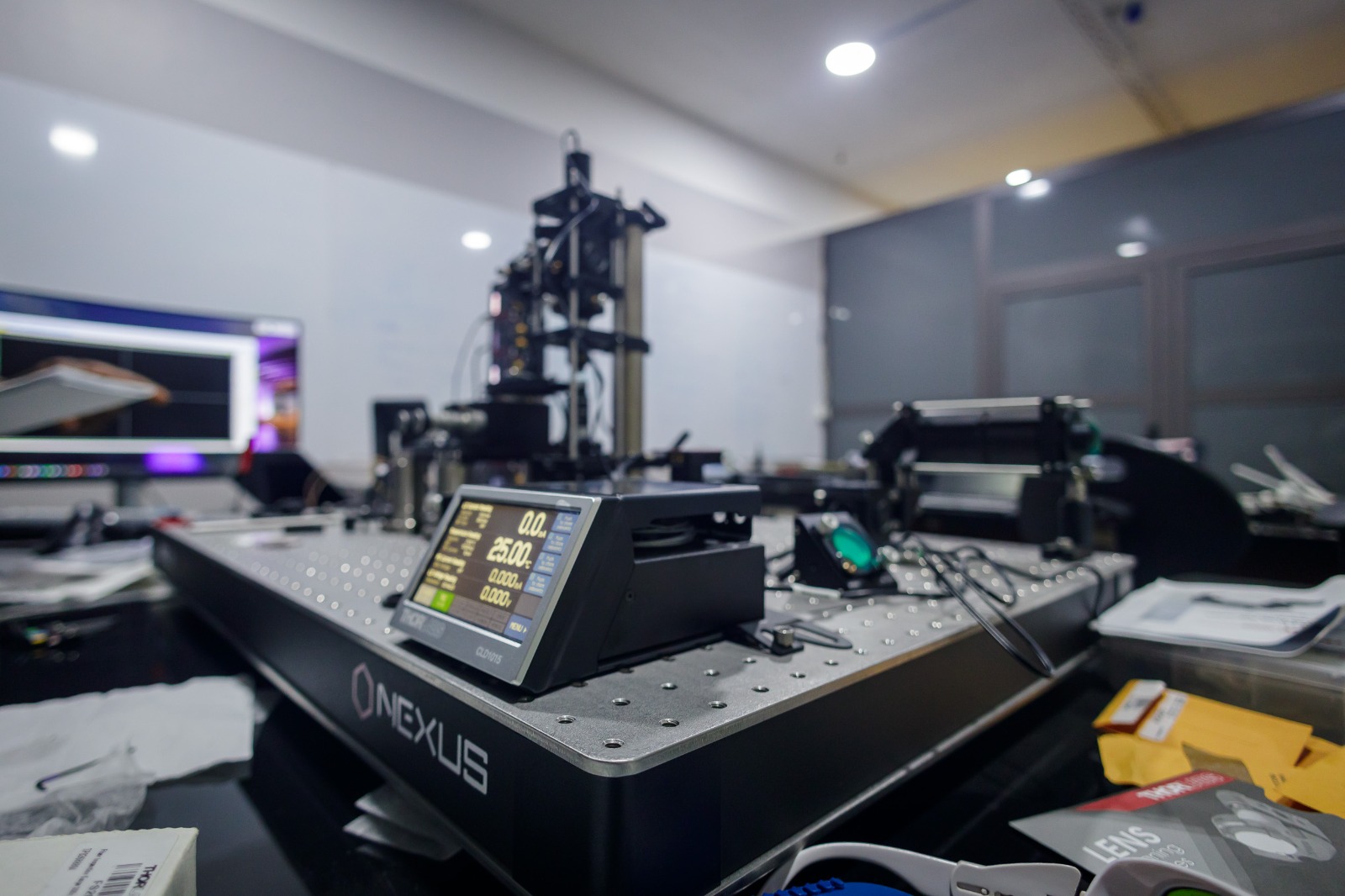
The Kwame Nkrumah University of Science and Technology, Kumasi (KNUST) is strengthening its collaboration with the University of Eastern Finland (UEF) through research training and student placements in photonics as the newly established Ghana Photonics and Optics Laboratory (GPOL) expands its international partnerships.
Four GPOL MPhil students are expected to spend three months at UEF in Joensuu, Finland, from October to December 2026 as paid trainees. They will work with research groups in computational spectral imaging, photonic integrated circuits and sensing, electron microscopy for biological imaging, and optical instrumentation.

Professor Jyrki Saarinen, Vice Director of the Photonics Research and Innovation (PREIN) Flagship at UEF and Chair of the Scientific Advisory Board of Photonics Finland, said the students would gain practical experience while working on research at the forefront of photonics.
“They will learn new things and gain new knowledge and practical experience under the guidance of our team leaders and colleagues,” Professor Saarinen said.
The collaboration builds on more than a decade of academic links between UEF and Ghana. Professor Saarinen said the arrival of Ghana's first student at UEF, Prince Bawuah, in 2011 marked the beginning of an expanding relationship. In 2012, Danlard Iddrisu from KNUST joined UEF's International Master's Degree Programme in Photonics.
Since then, 27 Ghanaians have graduated from the programme, including 10 from KNUST. Nine Ghanaian graduates have subsequently pursued PhD studies at UEF, while others have undertaken doctoral studies at institutions including Tampere University, Åbo Akademi University, the University of Copenhagen, the Technical University of Denmark and the University of Wisconsin-Madison.
Professor Saarinen said Ghanaian students had contributed to research at UEF and had gone on to work with companies and research institutions internationally, including Dispelix, Nanocomp, Microsoft, Nanoform and ASML, as well as the Photonics Integration Centre and the University of Cambridge. Others have returned to Ghana to work in areas including business and education.
Building a Photonics Ecosystem
The collaboration also highlights the importance of developing practical skills alongside academic training. Modern photonics involves micro- and nanoscale structures, precision engineering and the assembly of miniature systems, making hands-on technical expertise important to the development of a photonics ecosystem.
Professor Saarinen cited Finland's growing photonics industry as an example of how research, talent and industry can reinforce one another. He said the country's photonics industry had grown by more than 10% annually over the past decade, while universities and the PREIN programme had placed emphasis on economic growth and developing solutions to global challenges.
For KNUST, the partnership comes as GPOL develops its research, training and outreach activities within the Department of Physics. The laboratory was launched on September 22 during the inaugural NYANSAPƆ Photonics School for Health and Safety, which brought together emerging African scientists and international experts.
Professor Saarinen said the long-term objective should be a “strategic and sustainable partnership” between KNUST and UEF, potentially involving joint research proposals, academic exchanges, summer schools, staff lectures and co-supervised doctoral studies.
Such collaboration, he said, could strengthen research capacity at both universities, increase scientific output and create new opportunities for students and researchers.
Professor Saarinen also urged the four students travelling to Finland to take initiative, ask questions and engage actively with their supervisors and fellow researchers. He said the October-to-December period in Joensuu could be cold, dark and snowy and advised the students to prepare for the Finnish winter while adapting to a culture that values punctuality, independence and clear communication.
He described investment in photonics as an investment in the future, citing the growing role of light-based technologies across modern society.
“Investment in photonics is investment in future,” Professor Saarinen said.


